|
 |
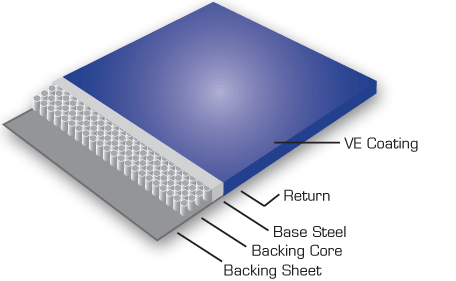
| CONSISTING OF THE FOLLOWING PARTS: |
| VE Coating: typically between 175 and 350 microns. |
| Return: typically 25-40mm. |
Base Steel: de-carbonized with options of 1, 1.2, 1.6
or
2mm thickness. |
Backing Core: choice of calcium silicate, honeycomb
or gypsum depending on use. |
Backing Sheet: 0.5mm GI sheeting, glued and sealed
for
external use, other options available. |
|
|
| |
| |
 |
|
 |
| APPROXIMATE WEIGHTS |
| VE Metal
Thickness |
|
1,2 |
1,6 |
2,0 |
Sheet Type
Panel
No Backing |
kg/m2 |
9,5 |
12,5 |
15 |
Tray Panel
With Backing, Typical |
kg/m2 |
15-22 |
18-25 |
20-32 |
|
|
| |
|
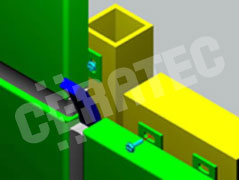
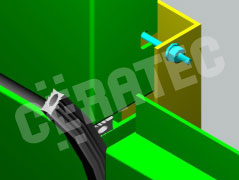
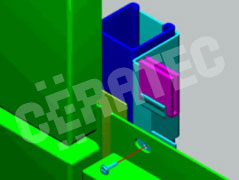
| The following are some examples of the most widely used fixing methods for Ceratec “Tray Type” Panels. Many other fixing methods and panel variations are available according to the project requirements and budget constraints. For any assistance or queries please contact us at info@ceratec.com.hk |
| |
 |
 |
 |
| |
|
|
SILICONE JOINT:
Generally used where water tightness is a significant requirement. The joints between the panels should be a minimum of 20mm wide with a panel depth of approximately 30mm. |
|
GASKET JOINT:
The gasket generally is made of non-toxic and non-combustible material (e.g. Santoprene or Neoprene). |
|
OPEN JOINT:
Primarily for internal applications but can be used externally for non watertight façade applications. Generally the panels will be fixed using concealed brackets. The panels can be designed to be easily removable. The horizontal joint is provided by the interlocking VE panels, the vertical joint is provided by the sub-frame. Joints are generally 10mm wide. |
|
|
|
|
|
| |
|
|